
Last updated November 21, 2026
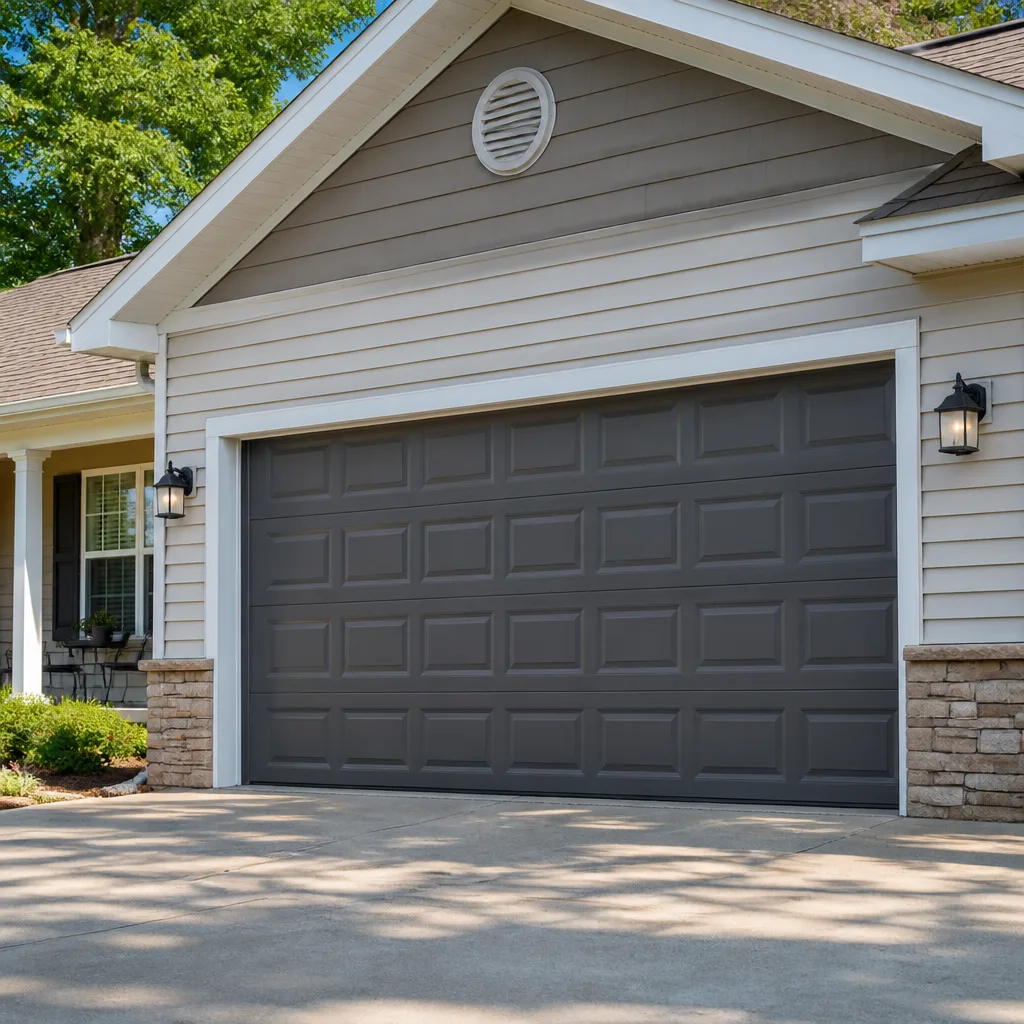 Raised-panel steel
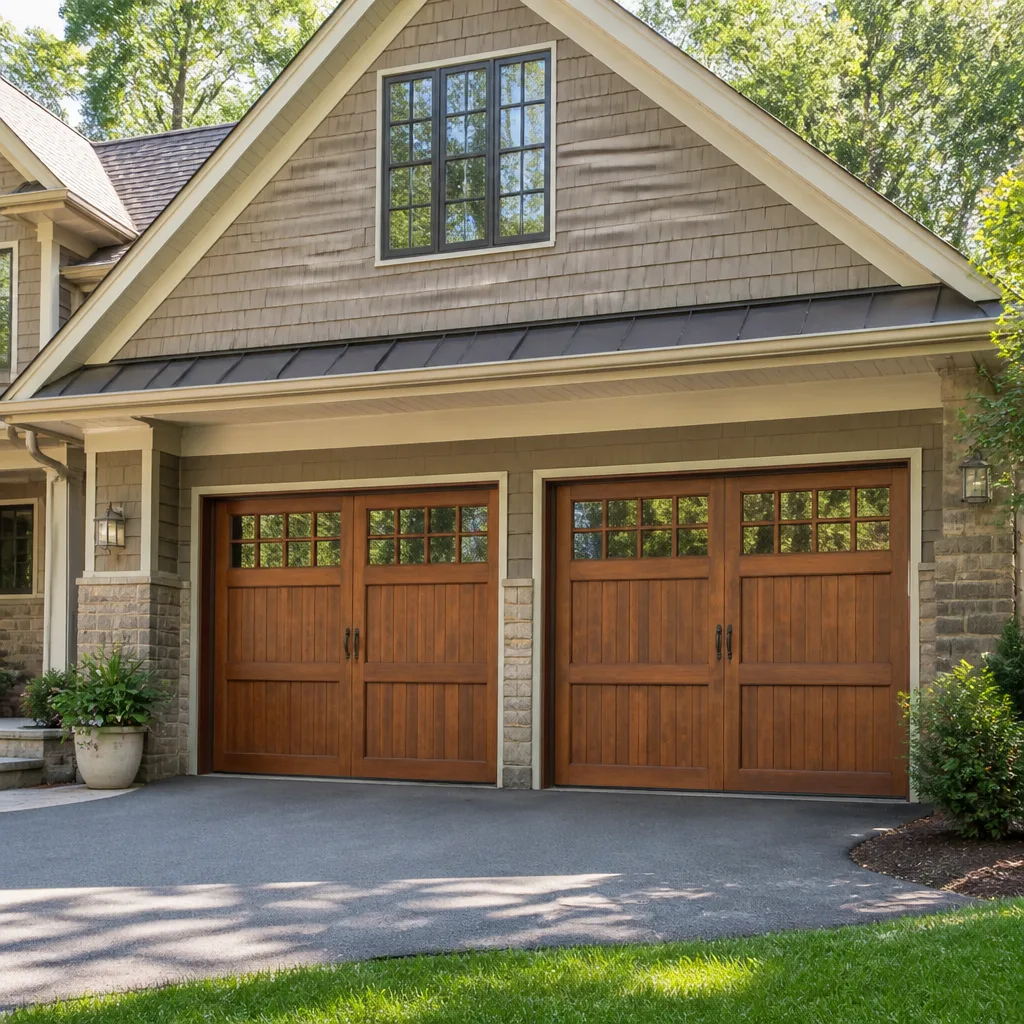 Carriage house
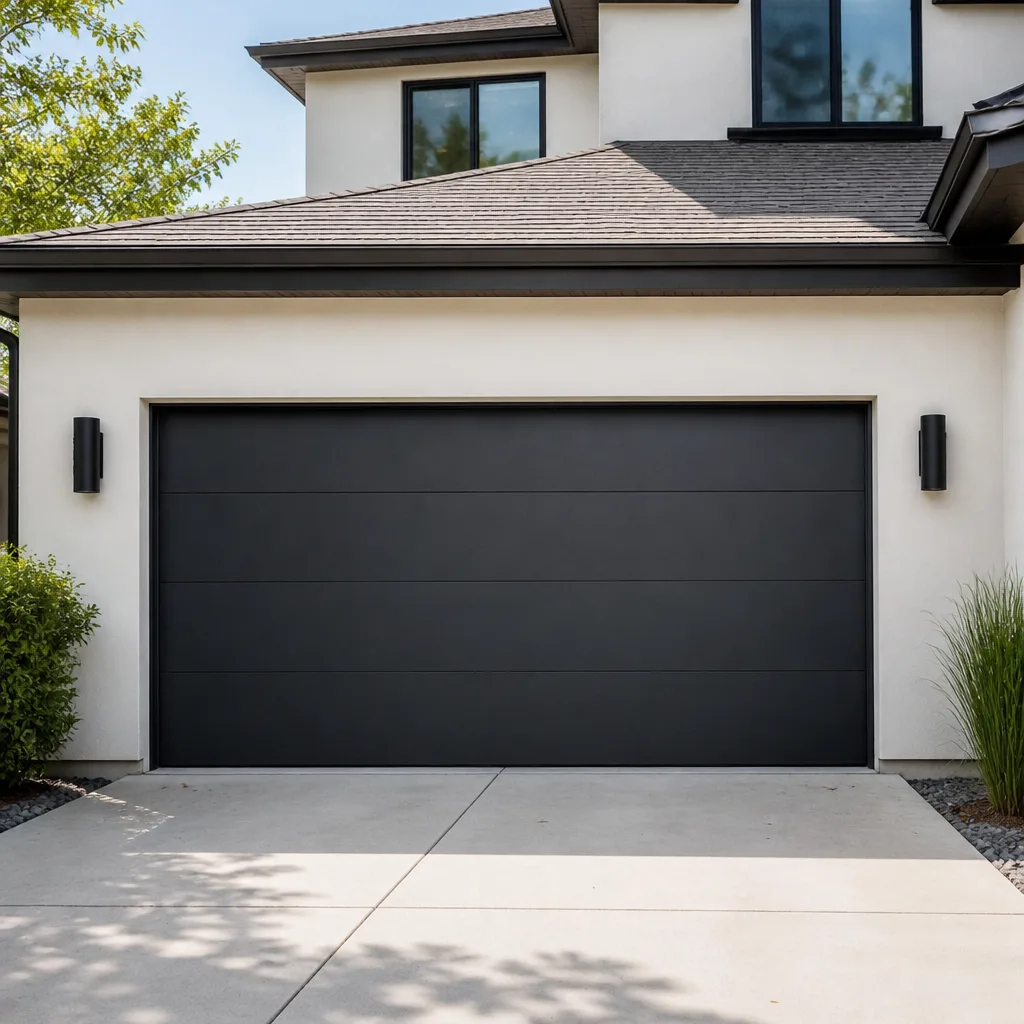 Modern flush
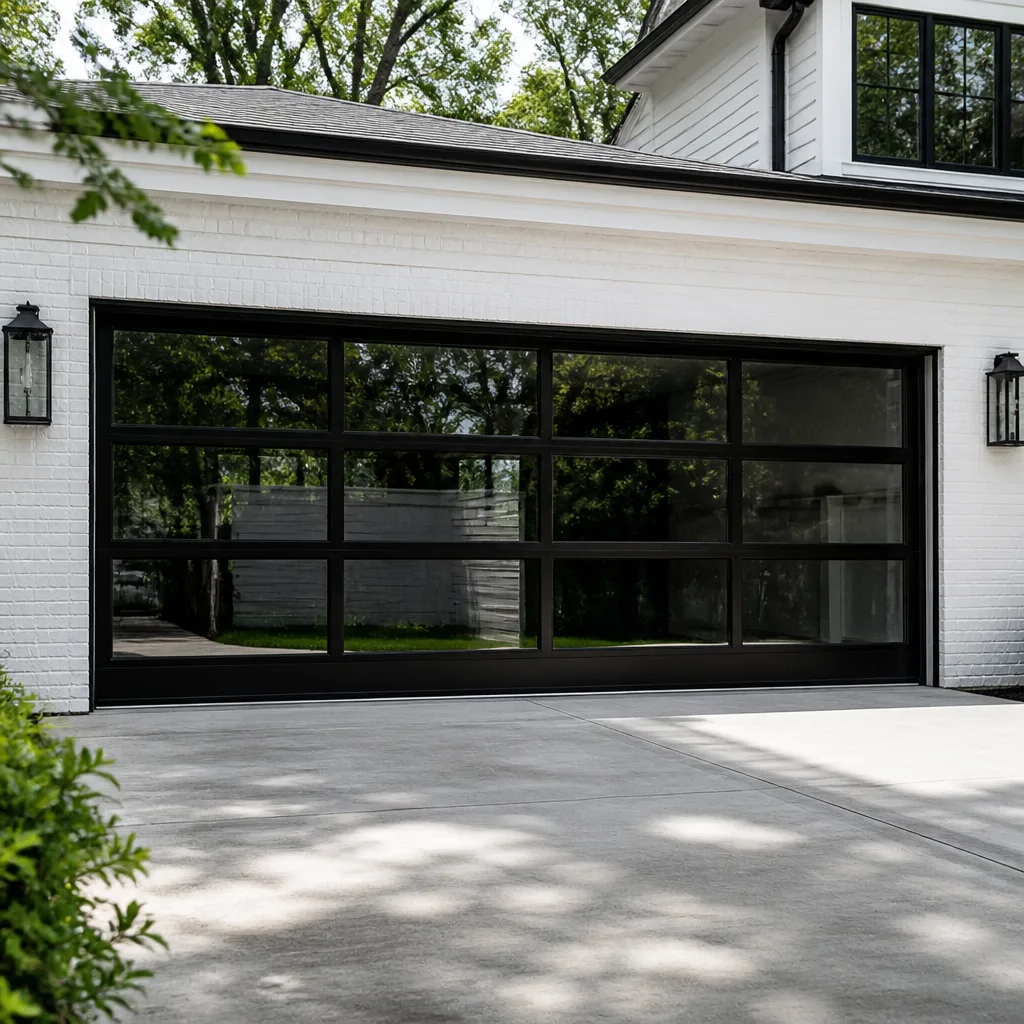 Full-view glass
 LiftMaster openers
 Chamberlain openers
Full 25-point door and opener safety check with every visit - springs, cables, rollers, tracks, and your LiftMaster or Chamberlain opener included
You get a price before we start. It does not change when the pro arrives.
Get your free estimateGarage Door Cost Breakdown: The Danbury Homeowner’s Reference for 2026
Two Danbury homeowners can get quotes for what sounds like “the same door” and see the numbers land $800 apart. Both quotes can be completely honest. Five legitimate variables drive that spread, and once you can name them, you can read a quote the way a contractor reads it. Most homeowners compare the bottom line and stop there. That’s where the money gets lost – not because anyone’s lying, but because nobody explained which line items are real and which are filler. This reference walks through the 2026 Danbury-market cost of a garage door system piece by piece, so you know where your money actually goes.
Quick Answer
In the Danbury market, a garage door repair typically runs $150 to $450 depending on the part, a new single-car door installs for roughly $950 to $2,800, and a double-car door runs about $1,600 to $4,500 based on material and insulation. Spring repair is $180 to $340 per spring, and a matched pair usually needs replacing together, so budget close to double that. These are typical estimates for planning; the written estimate you get after a measure sets the final price.
Styles & brands we work with
- Raised-panel steel
- Carriage house
- Modern flush
- Full-view glass
- LiftMaster openers
- Chamberlain openers
Table of Contents
- What Are the Component-Level Costs of a Garage Door System in Danbury?
- Which Variables Legitimately Move the Price?
- How Do Materials Compare on Total Installed Cost vs. 5-Year Maintenance?
- How Do You Read a Garage Door Quote Line by Line?
- Where Do Contractors Have Margin – and Where Don’t They?
- When Is Repair the Smarter Spend vs. Full Replacement?
- What Actually Happens on Installation Day in Danbury?
- What Danbury-Specific Factors Affect the Price?
What Are the Component-Level Costs of a Garage Door System in Danbury?
Every garage door system breaks down into five cost buckets: the door panel, the hardware (tracks, hinges, rollers, springs), the opener, the installation labor, and disposal of the old unit. Contractors quote almost everything bundled, which is convenient but makes it hard to check whether a line item is priced fairly. Seeing the buckets separately is the first step to reading a quote honestly. Here’s how the 2026 Danbury market typically looks:
- Door panel only: $450 to $2,400 depending on material, size, and insulation. A basic single-car steel panel sits at the bottom; a double-car insulated steel or composite panel tops the range.
- Hardware kit (tracks, hinges, rollers, torsion springs): $120 to $350 for a quality residential kit. Torsion springs are the pricey item here and often get quoted separately during repair.
- Opener (motor, rail, safety sensors, wall control): $200 to $650 for a belt or chain drive, depending on horsepower and connectivity features. The opener is a distinct purchase from the door.
- Installation labor: $300 to $700 for a standard single-car door, higher for oversized or double doors, low-headroom setups, or replacement of damaged framing.
- Disposal of the old door: $50 to $150, sometimes folded into labor. Wood or composite doors cost more to haul than steel.
A typical new-door project with a fresh opener lands around $1,200 to $3,200 depending on material and opener choice. Repair jobs are different animals – a garage door repair on a single failed component (a snapped spring, a bent track, a dead opener motor) frequently comes in under $500.
When any of these components fail on a door you rely on daily, the first question we usually hear is whether the whole system needs replacing. Usually it doesn’t. A trained technician can often swap a single opener or a worn spring and leave the rest of your setup alone, which is cheaper than re-doing the whole thing.
Which Variables Legitimately Move the Price?
Five variables account for almost all of the $800 spread between two quotes for “the same” door. None of them is markup drama – each has a real, measurable cost impact.
- Opening size. A single-car opening (8 or 9 feet wide) uses roughly half the material of a double-car opening (16 feet wide). Moving from a 9-foot to a 16-foot opening typically adds $600 to $1,200 to the panel cost alone.
- Insulation R-value. An uninsulated steel door runs at the low end of the panel range. An insulated door made with polystyrene or polyurethane between the skins costs $200 to $900 more depending on thickness, but it reduces heat loss from the attached garage and quiets the door considerably.
- Spring type. Extension springs (the ones running along the top of the track) cost less to install than torsion springs (the ones on the header above the door). Torsion springs are safer, smoother, and generally last longer, and their installation runs $50 to $150 more per door. A garage door in Connecticut faces enough seasonal temperature swing that many homeowners pick torsion for the durability.
- Opener horsepower. A 1/2-horsepower opener handles a standard single-car door. A 3/4 or 1-horsepower unit is often needed for a double-car or heavily insulated door, and adds $80 to $250 for the motor upgrade. Belt-drive openers cost more than chain-drive.
- Brand and warranty tier. A base-tier door from Amarr or Wayne Dalton will price lower than a premium insulated model from the same brand. The warranty gap between tiers is often as significant as the price gap, which is why the brand list matters more than the brand name.
These aren’t negotiating tactics – the numbers reflect actual materials and labor. When a quote comes in much lower than another, one of these variables is usually dialed back. It’s worth asking which.
How Do Materials Compare on Total Installed Cost vs. 5-Year Maintenance?
Material choice is the single largest swing in the quote, and the cheapest door up front isn’t always the cheapest over five years. Here’s the comparison most homeowners never see:
- Steel (standard, uninsulated): Lowest install cost, roughly $950 to $1,800 for a single door. Over five years, expect minor dings from lawn equipment, occasional touch-up paint, and possible rust along the bottom panel in a climate where snow and road spray get tracked in. Modest maintenance cost.
- Insulated steel: $1,300 to $2,400 single-door install. Fewer dents due to the interior backing, better thermal performance, quieter operation. Lowest five-year maintenance of the steel family.
- Wood composite (engineered wood overlay): $1,900 to $3,400 single-door install. Beautiful finish, but requires annual re-sealing in western Connecticut’s climate to keep moisture out of the joints. Five-year maintenance cost is the highest of the group.
- Aluminum (full-view or glass-panel): $2,200 to $4,000 single-door install. Doesn’t rust, doesn’t need refinishing, but dents more easily than steel and the glass panels become a cleaning routine. Moderate maintenance.
- Fiberglass: $1,100 to $2,000 single-door install. Weather-resistant and won’t dent, but can discolor over time and doesn’t insulate as well as polyurethane-filled steel. Low maintenance, moderate thermal performance.
The pattern is consistent: steel and fiberglass win on five-year cost, wood composite wins on appearance, aluminum wins on light and aesthetics for modern-style homes. A Danbury homeowner with a garage attached to the living space should weigh insulation heavily – the door is often the largest uninsulated wall on the house.
For an installation, the sequence matters too. We always schedule a free measure before quoting, because the actual opening dimensions and framing condition determine which materials will fit. A quoted price without a measure is a guess.
How Do You Read a Garage Door Quote Line by Line?
A good quote is itemized enough that you can match each line to a component. A bad quote is a single number with the word “complete” and no breakdown. Here’s how to read one in five steps:
- Find the door model and brand. A quote should name the exact model, not just “insulated steel door.” If it doesn’t, ask. A price without a model number is a placeholder.
- Separate the opener from the door. If the opener is bundled into the door price with no separate line, ask for the breakdown. Openers range $200 to $650 depending on horsepower and drive type; you should know which one you’re getting.
- Check the hardware line. Tracks, hinges, rollers and springs should be itemized or at least described by type (torsion vs. extension). A hardware line that just says “hardware” is where markups hide.
- Confirm disposal and labor are called out. If disposal isn’t mentioned, ask whether it’s included or extra. Same with hauling the old opener.
- Look at the warranty and the final line. A typical manufacturer warranty on the door panel is separate from a labor warranty. Ask how long each covers and what voids it. The final quoted total should match the line items; if there’s a line labeled “miscellaneous,” ask what it covers.
The most common bundled markup we see is on hardware kits and openers that could be sourced at standard retail rates but are marked up 20% to 40% inside the quoted total. That’s not necessarily dishonest – contractors do carry overhead – but it’s fair to ask for a line that shows hardware at retail so you can see the markup. The answer tells you a lot about how the company operates.
Where Do Contractors Have Margin – and Where Don’t They?
This is the part nobody publishes, so we will. Understanding where the money sits in a quote tells you what’s reasonably negotiable and what isn’t.
Where margin exists: hardware kits, opener selection, and premium door tiers. A contractor buying a hardware kit through a distributor can often get a better price than retail, and the spread between distributor cost and the line price is legitimate margin. Openers have similar spreads. Upgrading to a premium door line also carries more margin because the price point is higher – which is why some contractors nudge toward the higher tier.
Where margin is thin: installation labor, disposal, and repair work on individual components. Labor is priced by hours and skill, and there’s not much room to cut without cutting corners. Disposal fees are fixed by the hauler. Repair jobs (a spring swap, an opener tune-up) carry less margin than full installs, which is why some companies push replacement when repair would do.
A knowledgeable contractor will tell you which line is which. If a company won’t separate a $3,000 install into door, opener, labor and disposal, that’s a sign the margin is in the bundle.
On the repair side specifically, our garage door opener repair work is a good example: a failed motor, a misaligned safety sensor, or a stripped gear are all common fixes that don’t need a new opener at all. We diagnose first, quote the repair, and leave the replacement option on the table as a choice rather than a push.
When Is Repair the Smarter Spend vs. Full Replacement?
Repair wins when a single component has failed. Replacement wins when the panel is structurally compromised or multiple systems are failing at once. The decision rule most technicians use:
- Repair if the door is under 12 years old, the panels are sound, and the problem is isolated (spring, opener, track, roller). A single-part fix typically runs $150 to $450 – far less than replacement.
- Replace if the door is over 15 to 20 years old, the panels are rusted through or cracked, or the opener is failing at the same time as the door hardware. At that point you’re paying for parts on a dying system.
- Mixed cases: if the door is fine but the opener has failed, a new opener ($200 to $650 plus install labor) is still cheaper than a full door install.
- Consider replacing the springs even if the door is healthy: springs have a finite cycle life. If they’re original on a door that’s 10 or more years old, they’re living on borrowed time and are likely the next repair anyway.
The one repair category that always deserves a dedicated professional is the spring. A garage door spring repair is one of the few jobs in home maintenance with real injury risk – the spring is under high tension and can release violently if handled incorrectly. Torsion spring prices in Danbury typically run $180 to $340 per spring in 2026, and a matched pair is usually replaced together since the surviving spring has absorbed the same wear. Ask your technician for the pair price up front, since the per-spring number looks lower than the total you’ll pay.
What Actually Happens on Installation Day in Danbury?
A standard residential door installation takes most of a day, so it’s worth knowing what’s coming. Here’s how a typical install goes:
- Pre-install measure and confirmation (before install day). The technician measures the opening, checks the framing, and confirms the door model. This is where a written estimate becomes a fixed price. At Danbury Garage Door Repair Co, the measure is free and the written price is set before any work begins.
- Removal of the old door and opener. The crew takes down the existing door, tracks, springs, opener, and hardware, and stages them for disposal.
- Track and hardware install. New vertical and horizontal tracks go up; hinges, rollers, and torsion springs are installed and tensioned by the technician.
- Panel install. Panels stack into place and are fastened to the hinges; the bottom bracket is secured and the door balanced on the springs.
- Opener install. Rail, motor, safety sensors, and wall control are installed and wired. The motor is tested through a full cycle to make sure the safety reverse functions correctly.
- Final balance and test cycle. The technician runs the door up and down multiple times, adjusts spring tension, and verifies sensor alignment. This step usually takes 20 to 30 minutes and is the difference between a door that lasts and one that binds.
Because the install day is scheduled (not same-day), the price is stable – nothing on the install changes based on timing. Full installation work on multi-car or oversized doors may stretch into a second day depending on framing and opener wiring, so it’s worth confirming with the technician at the measure.
What Danbury-Specific Factors Affect the Price?
Danbury is inland Connecticut, which means a specific climate profile: hot, humid summers and cold, snowy winters with a wide annual temperature swing. That swing affects garage door pricing in three ways:
- Spring cycle life. Springs cycle every time the door opens and closes, and the metal fatigues faster in a wide-swing climate. A homeowner in Danbury who uses the door twice a day will typically see spring failure earlier than a homeowner in a more temperate area. Spring replacement is a normal maintenance item here, not a disaster.
- Insulation matters more. Because the garage is often the coldest room in a Danbury home in January, an insulated door pays for its upgrade in comfort and reduced heat loss. The R-value question is a real one for a homeowner with an attached garage.
- Weather-seal wear. The bottom seal and side weatherstripping on a Danbury door wear faster than in a drier climate. Ask for the seal condition to be checked during any repair visit; a worn seal lets snowmelt and road spray into the track well and can freeze the door shut.
Neighborhood context matters less than the housing stock, and Danbury has a range: older homes near the downtown and Mill Plain areas often have narrower single-car openings, while newer construction more frequently has full double-car openings and insulated doors. If your opening dimensions are unusual, the panel cost and lead time both change – another reason the free measure comes before any written number.
If you’re not sure what’s worth repairing versus living with, our Danbury Garage Door Repair Co service covers the full range: repair, opener repair, spring replacement, new installation, and emergency service. We work on your brand – LiftMaster, Chamberlain, Genie, Clopay, Amarr, Wayne Dalton, Craftsman, and Raynor – so a technician can diagnose and repair virtually any system already in your home.
Common Mistakes to Avoid
- Comparing bottom lines without comparing line items. Two quotes for “the same door” can differ by hundreds because of hardware, opener horsepower and insulation, not markup. Always compare line by line before deciding which is cheaper.
- Choosing the cheap opener tier on a heavy insulated door. An underpowered opener burns out the motor or strips the gears. Match the horsepower to the door weight and the installation will last.
- Assuming the per-spring price is the total. A matched pair is almost always replaced together, since the second spring has done the same work. Ask for the pair price up front so the invoice doesn’t surprise you.
- Skipping the free measure. A quote without a measure is a guess. Opening dimensions, framing condition and headroom clearance all move the price, and any engineer worth the name measures first.
- Going with the cheapest door for the climate. In Danbury, an uninsulated steel door leaves the garage freezing in winter and baking in summer. The upgrade to an insulated panel is often the single best value in the quote.
- Letting an unlicensed handyman touch the springs. A spring under tension can cause serious injury if it releases. Spring work belongs to a trained professional, not a general helper.
- Not asking what happens to the old door. Disposal is $50 to $150 and sometimes gets left off the quoted total. Ask up front whether it’s included.
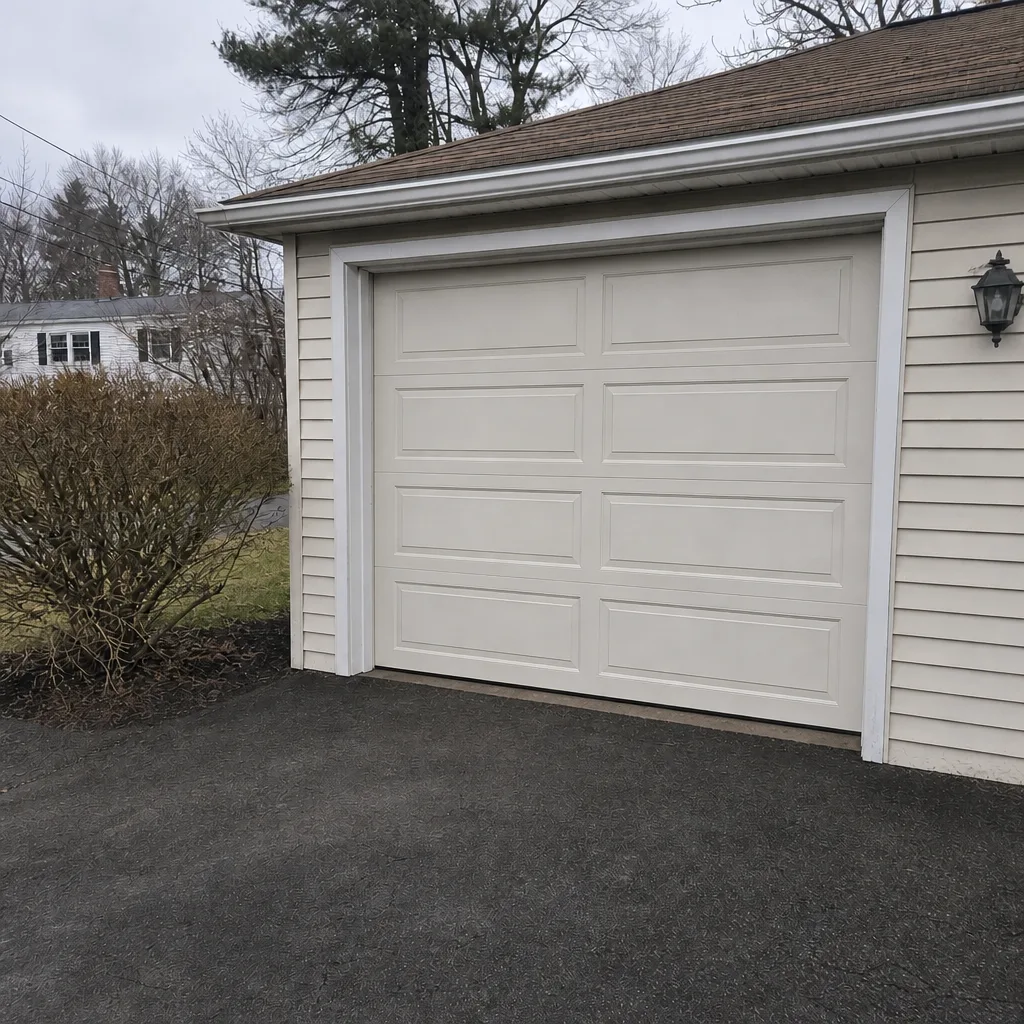
See the difference
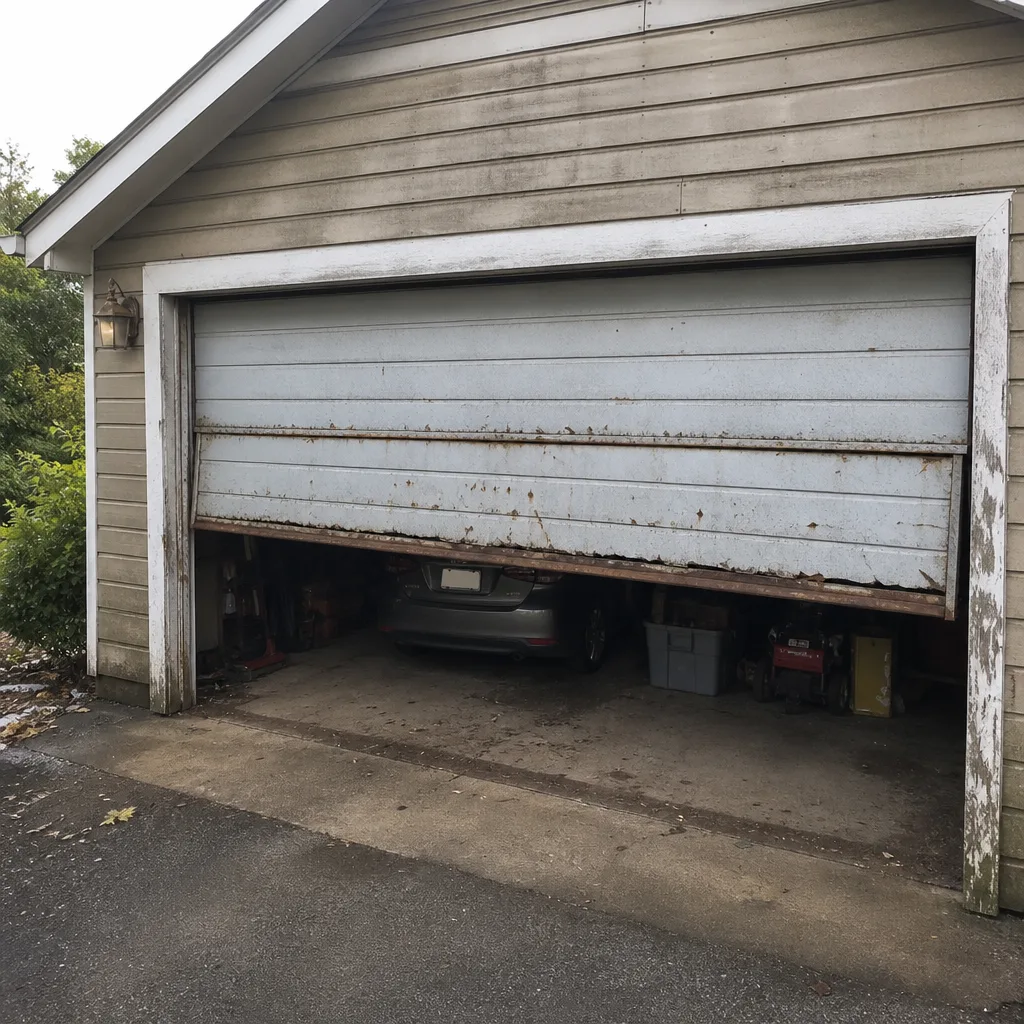 Before
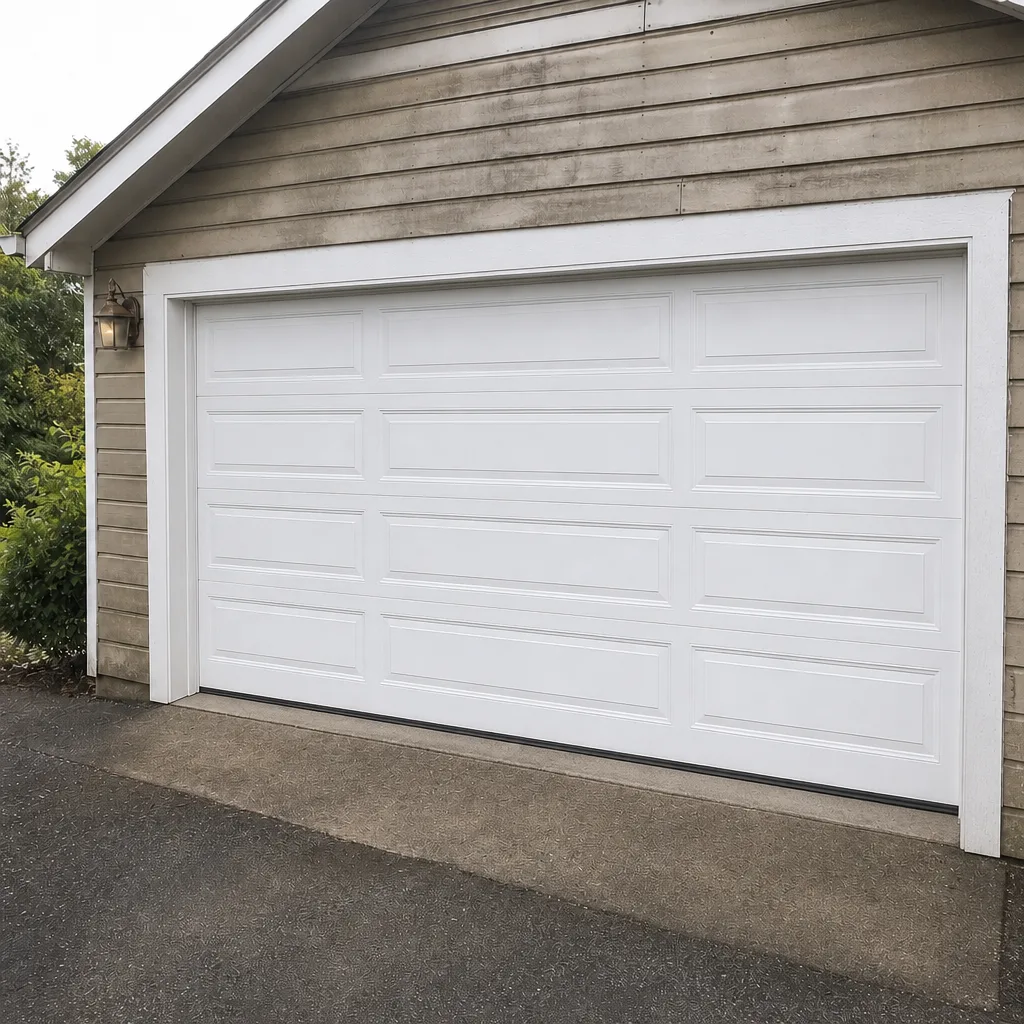 After
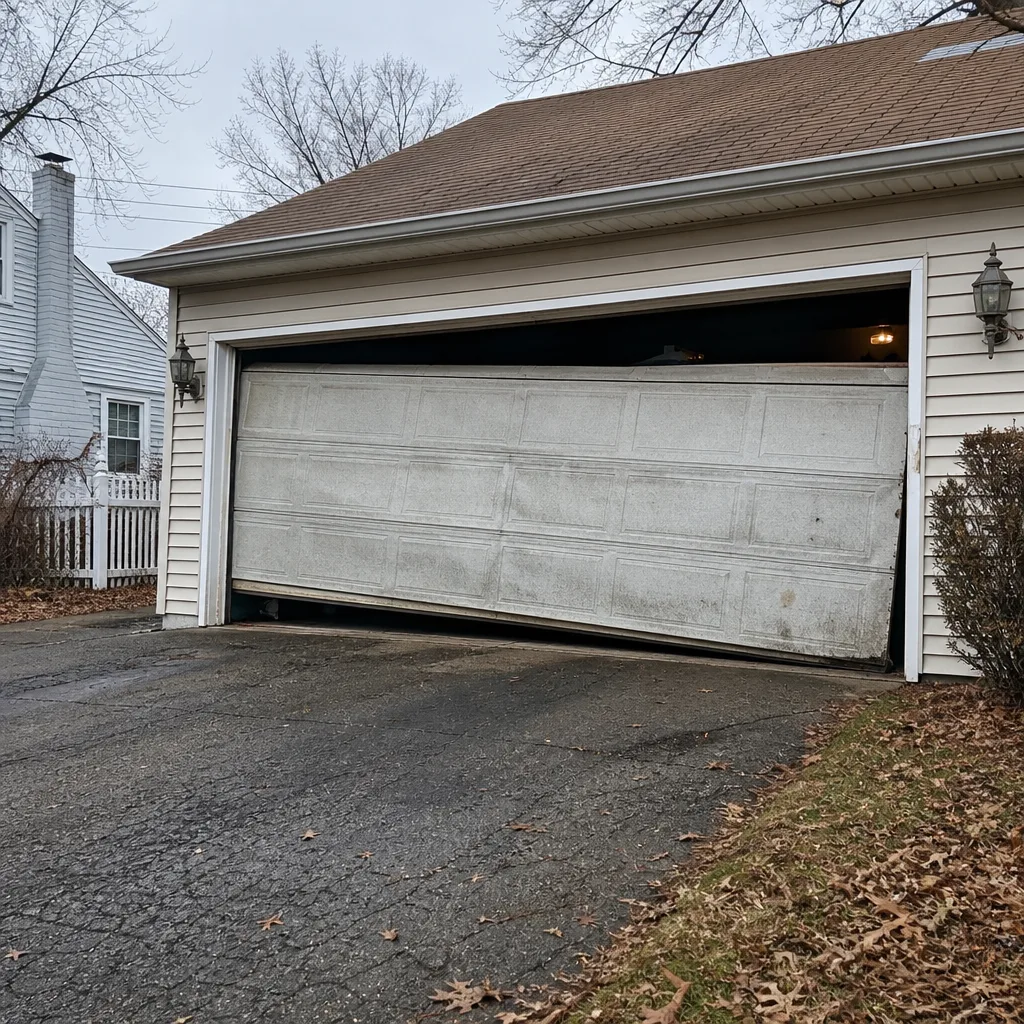 Before
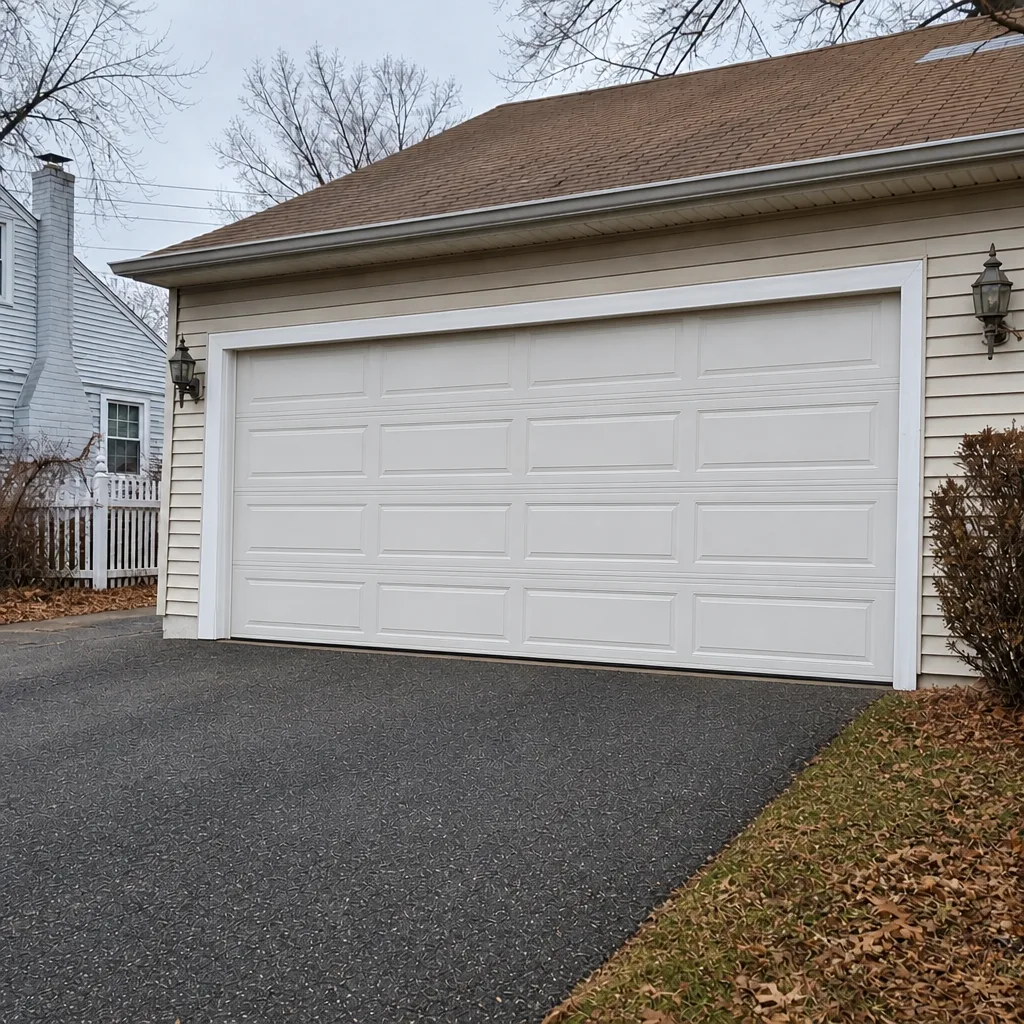 After
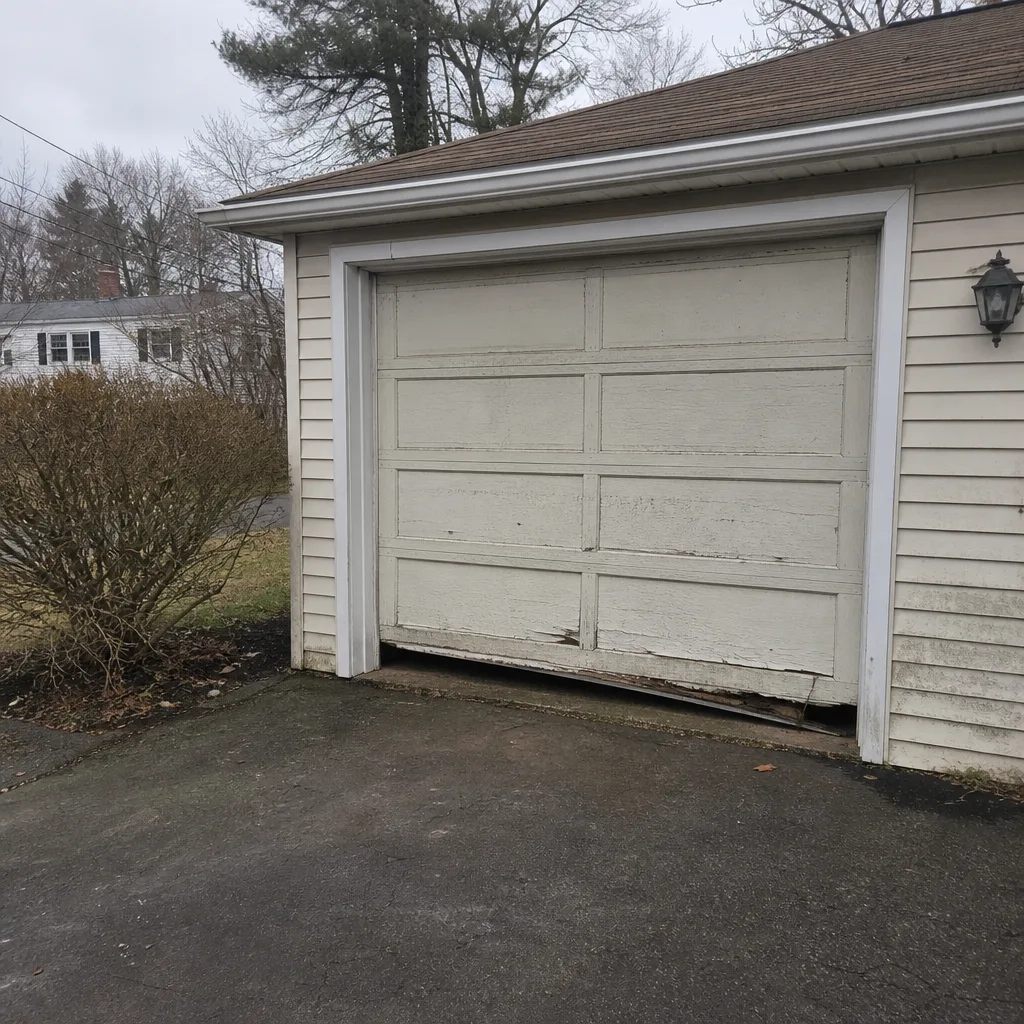 Before
 After
When to Call a Professional
Call a professional when the spring breaks, when the door won’t open or close at all, when the opener runs but the door doesn’t move, when a panel is off its track, or when the door closes unevenly and stops. Those are the scenarios where a day’s delay means a car stuck in the garage. Spring work is the highest-stakes category here – a damaged spring can fail suddenly and cause serious injury, so it isn’t a task we’d ever recommend a homeowner attempt. If the problem is cosmetic (a dented panel, a squeaking roller) a scheduled repair is fine and can wait. Danbury Garage Door Repair Co offers free estimates in Danbury, and our technicians have up to 15 years of experience across the brands we service. Call (844) 524-6649 to book a measure or a repair. We answer 24/7. Fast dispatch from 7am to 7pm, Sunday through Friday.
Frequently Asked Questions
Most garage door repairs in Danbury fall between $150 and $450 depending on the component. A broken spring runs $180 to $340 per spring (a matched pair usually costs about twice that since both get replaced together), a damaged section can cost $250 to $600, and an opener repair typically runs $120 to $380 depending on the motor and drive type. These are typical ranges; the written estimate sets the final price. Call (844) 524-6649 for an exact quote – estimates are free.
A new single-car garage door installed in Danbury typically costs $950 to $2,800, and a double-car door runs about $1,600 to $4,500 before opener and disposal are added. Material drives most of the spread: uninsulated steel sits at the bottom, wood composite and aluminum at the top. Installation is scheduled after a free measure, so no same-day promise. Call (844) 524-6649 to book a measure and get a written price.
Only if the on-site inspection reveals something the measure or phone description didn’t capture, such as damaged framing, a nonstandard opening size, or an opener with additional wiring needs. In those cases we explain the change and re-quote before any work starts. The price is accepted in writing before we begin, so there are no post-install surprises. Call (844) 524-6649 to get the process started.
Usually yes for repair and emergency calls. Spring repair and opener repair are same-day work in most cases, and emergency calls take the same priority as a scheduled visit. We answer 24/7. Fast dispatch from 7am to 7pm, Sunday through Friday. Call (844) 524-6649 for an exact quote on the spring repair – estimates are free.
The local pros we connect you with are licensed and insured as their state requires. That matters most on spring and opener work, where an untrained repair can cause injury or damage. Our technicians have up to 15 years of experience across the eight major brands we service, so custom setups and nonstandard openers are familiar ground. Call (844) 524-6649 to confirm coverage in your area.
Many Connecticut municipalities require a permit for garage door replacement because it’s a structural opening, but rules vary. Ask the City of Danbury building department directly before the install date; the answer is quick and it keeps the process clean. Your contractor can typically pull the permit, and the cost is usually added to the quoted total. Call (844) 524-6649 if you’d like a measure and a written estimate first.
The Bottom Line
The difference between two quotes for “the same door” usually comes down to opening size, insulation, spring type, opener horsepower and brand tier – not markup theater. Read the quote line by line: door model, opener model, hardware type, disposal, and the warranty on each. Then ask where the margin sits, because a good contractor will tell you straight. Repairs typically run $150 to $450; new installs $950 to $4,500 across materials. Nothing is billed above the agreed price, because the written estimate sets the final number before work begins. Call (844) 524-6649 for your free estimate in Danbury.
Written by the team at Danbury Garage Door Repair Co.